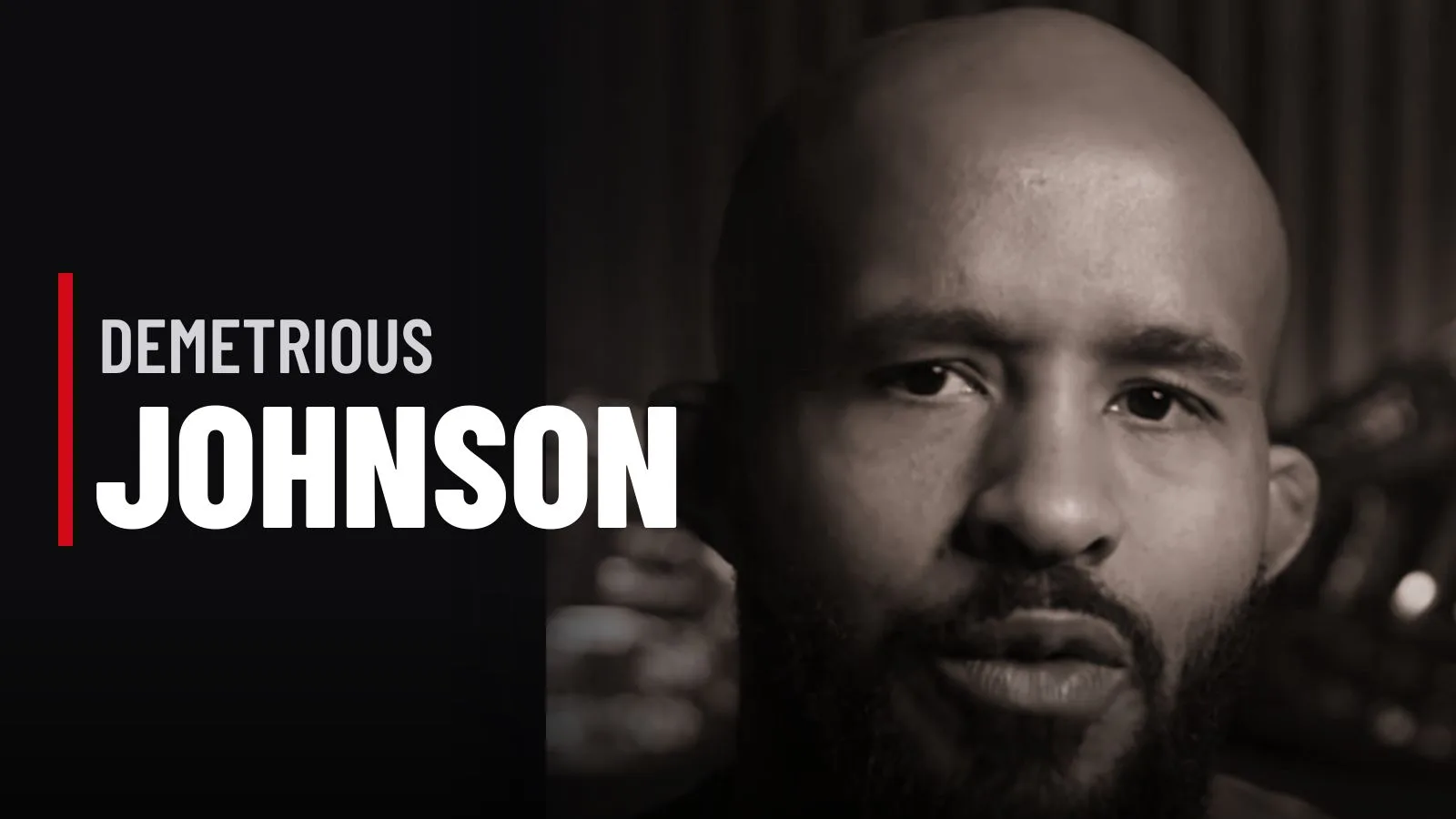
Demetrious Johnson wants two knee-wrecking techniques pulled out of mixed martial arts. I’m splitting the ticket on him. The oblique kick should go. The heel hook should stay, and the best argument for keeping it came out of Johnson’s own mouth.
In clips Ariel Helwani posted on X on Monday, Johnson made his position plain. He doesn’t throw oblique kicks. He doesn’t hit heel hooks. He won’t teach either one. “It can ruin somebody’s career,” he said, before reaching for a football comparison: “You cannot rough the quarterback because they want to make sure the quarterback has a long career. I see it the same way for mixed martial arts.”
The analogy holds up better than it sounds on first listen, mostly because of something else Johnson said in the same sit-down. He argued again that the UFC operates as entertainment, pointing out that the promotion decides who fights whom. “You get to f*cking make the matches,” he said, adding, “Just say it’s entertainment.” Fine. Take him at his word. If the product is entertainment, then a healthy star is inventory, and the NFL figured out a long time ago that you protect the inventory people pay to watch. A league that wants its quarterback playing for 15 years writes rules to keep him upright. A promotion that wants its champions defending belts for years should want their knees bending in the right direction.
View post on X
I’ll be honest about my limits here. Nothing in these clips gives me an injury rate for oblique kicks or heel hooks, and I’m not going to invent one to sound smart. I’ve lost enough money trusting numbers that turned out to be vibes. So this one gets argued on structure, which is where Johnson’s case is strongest and where it also springs a leak.
The Oblique Kick Has No Exit
The oblique kick is a stomp to the front of a planted lead leg, driving the knee backward. The guy on the receiving end makes zero decisions once it lands. There’s no tap. A referee can’t step in halfway through a stomp. You can defend it with your stance and your distance, sure, the same way you can defend a jab. The difference is the cost of losing that exchange. Eat a jab and you reset. Eat a clean stomp on a locked knee and you might be shopping for a surgeon.
That asymmetry is what bothers me as a numbers guy. Fighters already carry enough risk that shows up on the betting board. Few things make me grumpier than a fighter returning from a long layoff at short odds, and a knee rebuild is one of the fastest ways to manufacture exactly that kind of overpriced comeback. I’ve bitten on those. I’ve regretted those.
View post on X
The Heel Hook Comes With a Door
Here’s where Johnson argues against himself. Explaining why he’s comfortable finishing people with arm locks, he said, “I’ll break somebody’s arm because you have an opportunity to tap, right?”
Right. And a heel hook offers the same opportunity. It’s a submission. The man caught in it can quit before the joint gives. The honest complaint grapplers raise about heel hooks is that the knee doesn’t send much warning before the damage starts, so people tap late. That’s a real problem. The fix is coaching people to tap early, and making sure referees recognize the position and watch it closely. Banning the hold outright punishes the technique for a failure in education.
Johnson also lumped the two together, saying heel hooks and stomping on a knee both strike him as dirty. I understand the gut reaction. Both target the same joint, and both can end a career in a second. But one gives the defender a choice and the other doesn’t, and Johnson himself drew the line at choice when he talked about the armbar.
His personal code is admirable, by the way. He said flatly that he doesn’t teach the technique, and a coach deciding what gets drilled in his own gym is about as legitimate as decisions get in this sport. That’s a gym choice. A rule change is a different animal, because it binds everybody.
View post on X
Black and White
The funny part is that Johnson framed his views on Sean Strickland’s pay complaints the same way, in clips Helwani posted the same afternoon. He described himself as a black and white kind of guy, noting Strickland has five fights left on his deal. He told a story about fighting through his own contract as champion because the UFC wouldn’t pay him more, then boiled it down to a single question for Strickland: do you want to fight or not?
Apply that standard to the knee. A man caught in a heel hook gets asked that exact question, and he can answer it with his hand. A man eating an oblique kick never gets asked at all. That’s where I’d draw the line, and it’s the line Johnson drew himself when the joint in question was an elbow.