
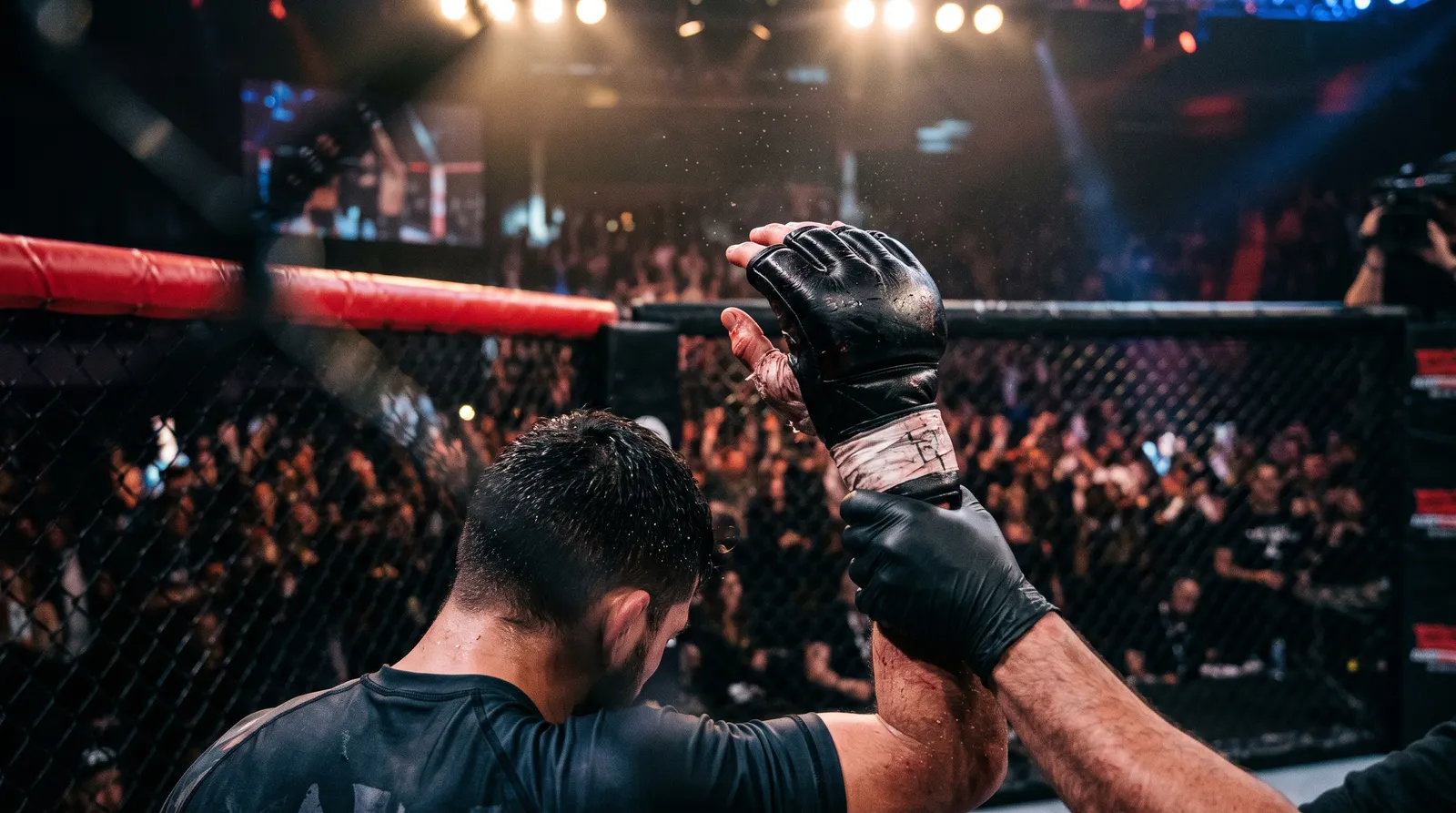
Joe Rogan went after his own employer on his own podcast this week, and the UFC deserved every word of it.
On a recent episode of The Joe Rogan Experience, the longtime UFC analyst took aim at the promotion’s decision not to re-sign Farid Basharat, the undefeated bantamweight who just beat John Garza at UFC 329. Rogan didn’t bury the lede. “I don’t like that!” was the gist, and he kept going from there.
He’s right. The people running the company should be a little embarrassed that the guy in the commentary booth had to be the one to say it out loud.
The resume they let walk
Look at what Basharat did in the Octagon. He beat Chris Gutierrez. He beat Taylor Lapilus. He beat Da’Mon Blackshear. Then he beat Garza. No losses anywhere on the ledger, and BJPenn.com described him as one of the most intriguing prospects in the division. His reward for that run was a handshake and the door.
BJPenn.com reported that the cut drew fire from fighters, pundits and fans in the days after it surfaced. Dana White didn’t exactly cool things down. The outlet characterized his explanation as vague, and a follow-up piece, framed as White clearing up a misconception about the exit, led with this line from the boss: “I saw the kid on Instagram last week.”
That’s the quote they went with. If there’s a sound business reason buried in there somewhere, nobody has dug it up yet.
Rogan’s theory, and his caveat
What I liked about Rogan’s take is that he answered the question straight, including the part where he admitted what he didn’t know.
“They just decided that they didn’t like his style, and I might be talking out of school here,” Rogan said. He added that he hadn’t talked to White or the matchmakers and didn’t know what happened. Most people yelling about this online haven’t offered that disclaimer. Rogan did, and then he made his point anyway, which is how you’re supposed to do it.
The point was simple. “I don’t like not signing a guy who wants to be in the UFC and is fighting and winning,” he said.
Then he landed the best shot of the whole rant. Rogan brought up Khamzat Chimaev winning the middleweight title from Dricus du Plessis in a fight he said a lot of people found boring. “You’re saying that Khamzat can’t fight in the UFC after he beat Dricus for the title?” he asked.
That’s the hole in the style argument, and it’s a big one. Nobody is cutting a champion because the crowd got restless. The style police only show up when the fighter is a prospect without leverage, a guy who can be replaced by the next name on the regional scene. Apply the same standard at the top of the card and the whole idea falls apart in about one sentence.
Chaos belongs to the matchmakers
I’ll confess my bias here. I love chaos. I love the matchmaker who looks at a bantamweight ladder and books the fight that makes everybody in the press row put down their phones. I love the short-notice guy who takes the call on four days and walks out swinging.
But chaos is the matchmaker’s job. The fighter’s job is to win. Basharat did his job four times in a row.
Rogan put it this way: “People want everything to be chaos and blood.” And later, the line that should be taped to the wall in the matchmaking office: “this is what the game is! It’s winning!”
There’s a practical problem with cutting unbeaten fighters over taste, too. Every prospect on the roster is watching. If a clean record doesn’t buy you a second contract, the message to a 25-fight veteran on the prelims is to take dumb risks, brawl when you should wrestle, and hope the highlight saves you when the loss doesn’t. That makes for worse fighters and, eventually, worse fights.
Basharat also isn’t the first. BJPenn.com pointed to the head-scratching release of Muhammad Mokaev and other interesting prospects before him. Once is a judgment call. A pattern starts to look like a policy, and it’s a policy nobody at the company has explained in plain English.
What happens next
As of BJPenn.com’s report, Basharat hadn’t signed with another promotion, though the outlet expects him to be a hot commodity in free agency. That’s the easy prediction of the week. An unbeaten bantamweight with four UFC wins doesn’t sit on the open market long.
Whoever signs him gets a fighter the UFC developed, promoted on its own cards, and then handed over for free. Somewhere, a rival matchmaker is drafting the press release right now, and for once I won’t even complain about the language in it.