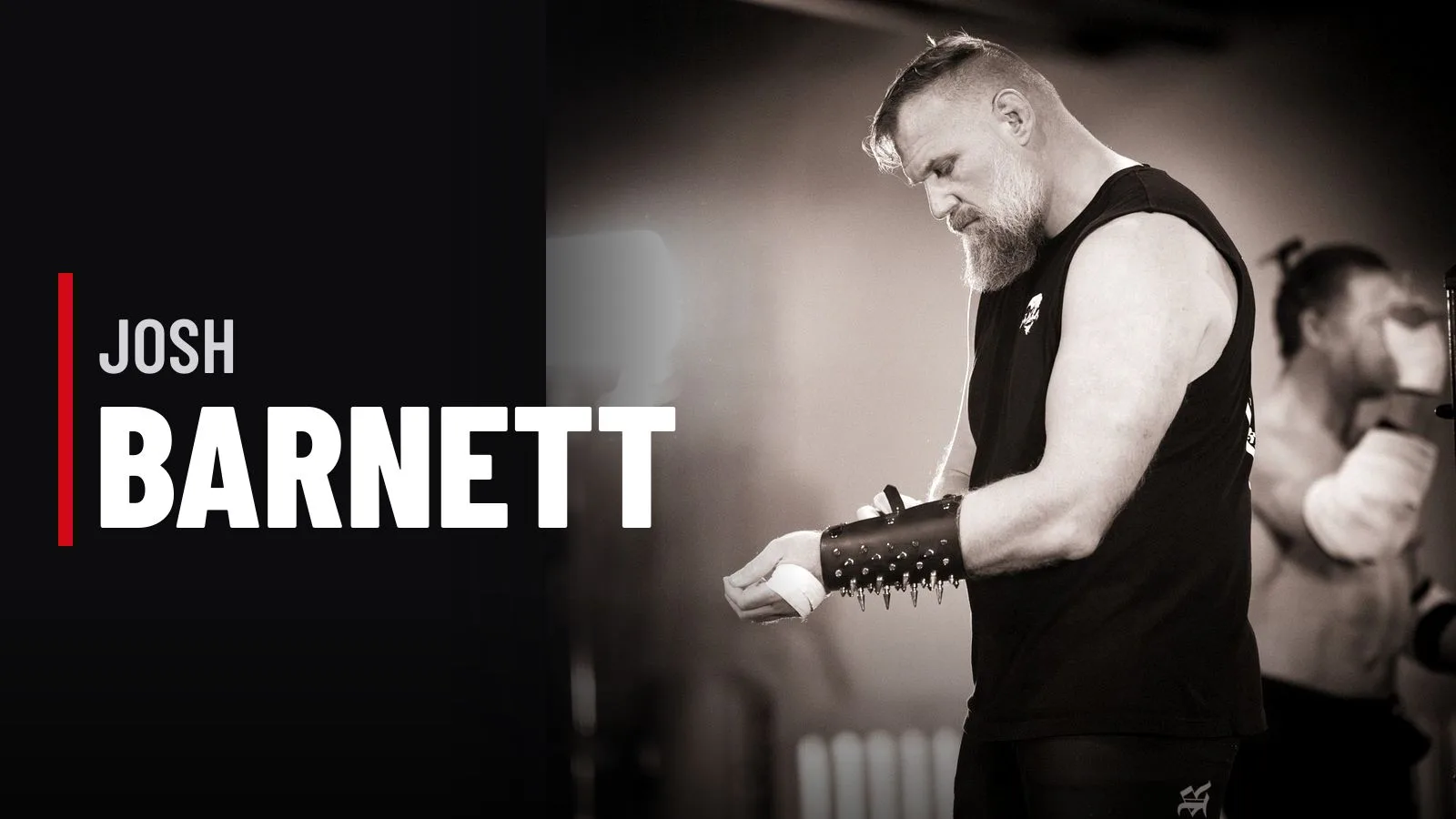
Josh Barnett has spent a lifetime around joint locks, so when he says a heel hook and an oblique kick don’t belong in the same sentence, it’s worth listening to him. On Monday, Ariel Helwani posted Barnett’s response to Demetrious Johnson’s comparison of the two techniques, and the former UFC heavyweight champion opened with a sentence nobody could misread: “DJ is flat-out wrong about heel hooks, and his logic doesn’t follow at all.”
Barnett is right, and the reason fits in two words he used himself. Tap out.
The vote you never get
Here is the core of what Barnett told Helwani: “There’s no need for something that can just ruin a fighter’s career instantaneously. There’s no ability to tap out.” He then drew the contrast in plain terms, describing a heel hook as the kind of hold where a fighter can say he quits and he’s done, “But not that quickly” with an oblique kick.
View post on X
That distinction carries the whole debate. A submission is a negotiation, even a brutal one. A heel hook takes a joint toward the point of failure, and the person caught in it gets a say in how far it goes. He can tap, a referee can step in, and the hold can be released. Grappling has always run on that bargain between pressure and surrender. Some fighters wait too long, and some knees pay for that pride, but the choice exists.
An oblique kick removes the choice. It’s a strike, thrown at speed into the front of a planted leg, and the damage happens in the instant of contact. There is no moment where the fighter on the receiving end can decide he’s had enough, because by the time he registers what happened, it already has. You can’t tap to a kick that’s already landed.
Comparing the two because both attack the leg skips that entirely. Johnson is one of the smartest fighters the sport has produced, but lumping a technique that offers an exit with one that offers none is a category error. Barnett’s complaint is about the logic, and the logic is where Johnson’s comparison falls apart.
The qualifier that matters
Barnett’s position deserves credit for being specific about scope. He didn’t say fighting should be safe or that every dangerous technique ought to go. His exact words: “I’m in favor of banning [oblique kicks] if you want to run an MMA sporting league in a more sports-oriented format.”
That’s an honest framing. Regulated MMA already draws lines around what a fighter can do to another person, and those lines exist because a sport needs its athletes to come back. The question Barnett is asking is whether this particular technique passes the test the other rules are built on. A move whose main function is to wreck a knee before anyone can react fails that test, and it fails it for the reason he named.
A consistent man this week
The oblique kick take didn’t arrive in a vacuum. Helwani posted a second Barnett clip about 11 minutes later, this one about slap fighting after what happened to Jake Hager, and Barnett was even harsher. He called it “the dumbest thing I’ve ever seen in my entire life” and said he couldn’t find anything good to say about it.
View post on X
What stood out was how personal it was. Barnett acknowledged that he and Hager have had their differences, then listed what Hager had done with his athletic life: an Oklahoma wrestler, a Division I All-American, a run through WWE and AEW, fights in Bellator. “There’s so much more you could do with your life and career,” Barnett said. He even argued Hager would be better off doing MMA than slap fighting.
Put the two clips next to each other and you get a clear picture of how Barnett thinks. He cares about the length of a fighter’s career, and he’s willing to say out loud which risks he considers worth taking and which ones he doesn’t. That’s the same instinct behind his oblique kick stance. Hard sport is fine. Pointless destruction of the body is where he gets off.
There’s a builder’s streak in it too. On Nov. 6, after New Japan Pro-Wrestling announced that NJPW of America was ceasing operations and entering liquidation, Barnett wrote on X that he had offered to take over the whole U.S. program, including training, classes and local shows. He said he saw an expensive asset that wasn’t being fully used. A man who pitches himself to run a training operation is a man who thinks about systems and the people inside them. When he talks about a “sports-oriented format,” he’s thinking like someone who’d have to answer for the injuries.
Where this goes
Nobody on the rule-making side has acted on Barnett’s suggestion, and his voice alone won’t change anything. But the argument is sound, and Johnson’s comparison doesn’t hold up against it. A heel hook gives a fighter the dignity of quitting. Until someone writes an oblique kick ban into the rules, the only person deciding whether a knee survives the kick is the one throwing it.