Fast facts
- Division: Heavyweight (retired)
- Record: 40-7, 1 NC
- Nationality: Russian (born in Rubizhne, Ukrainian SSR)
- Team/gym: Red Devil Sport Club in St. Petersburg; VOS gym in the Netherlands; began with Russian Top Team
- Notable wins: Antônio Rodrigo Nogueira (twice), Mirko Cro Cop, Kevin Randleman, Mark Coleman, Mark Hunt, Semmy Schilt
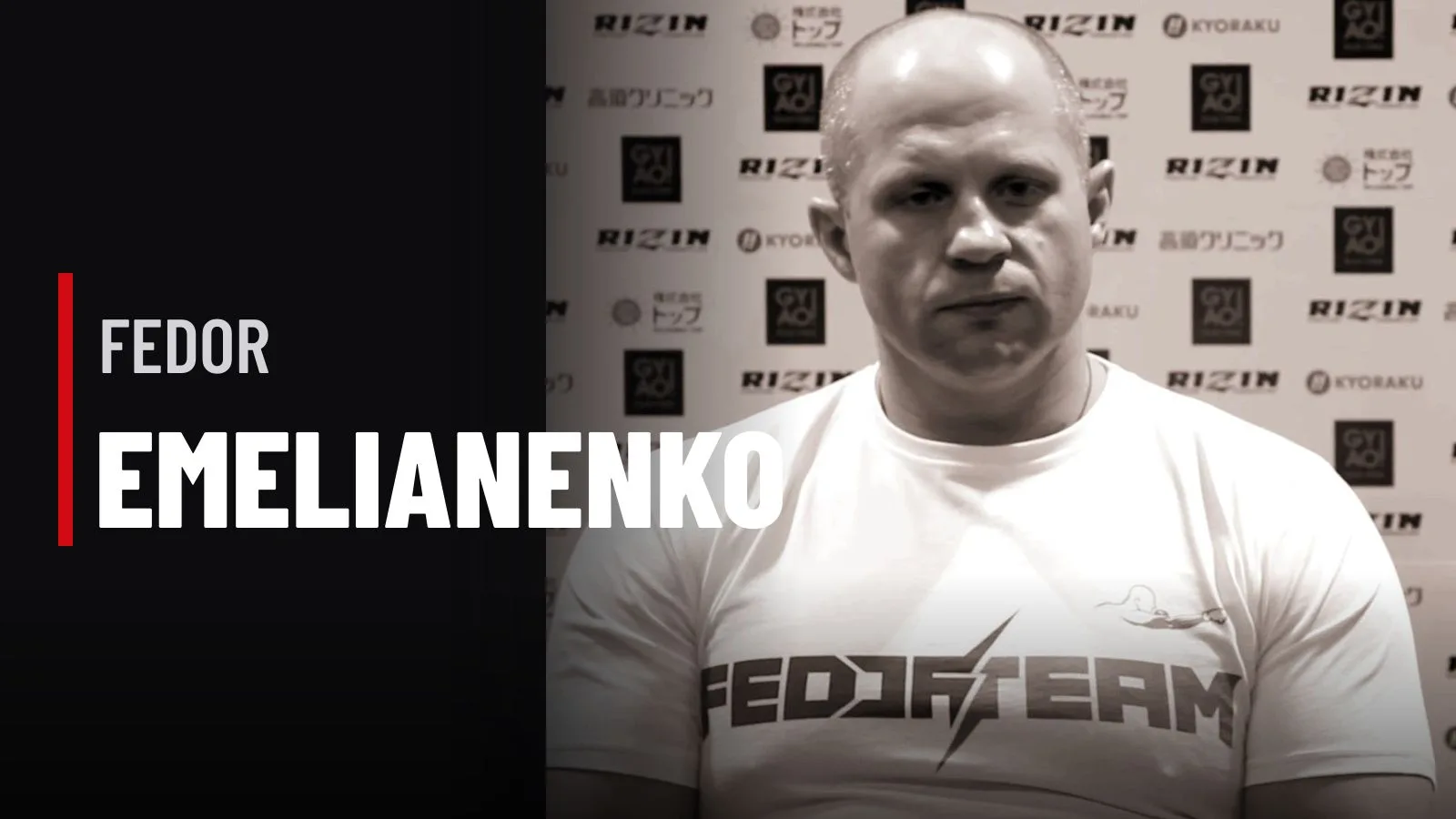
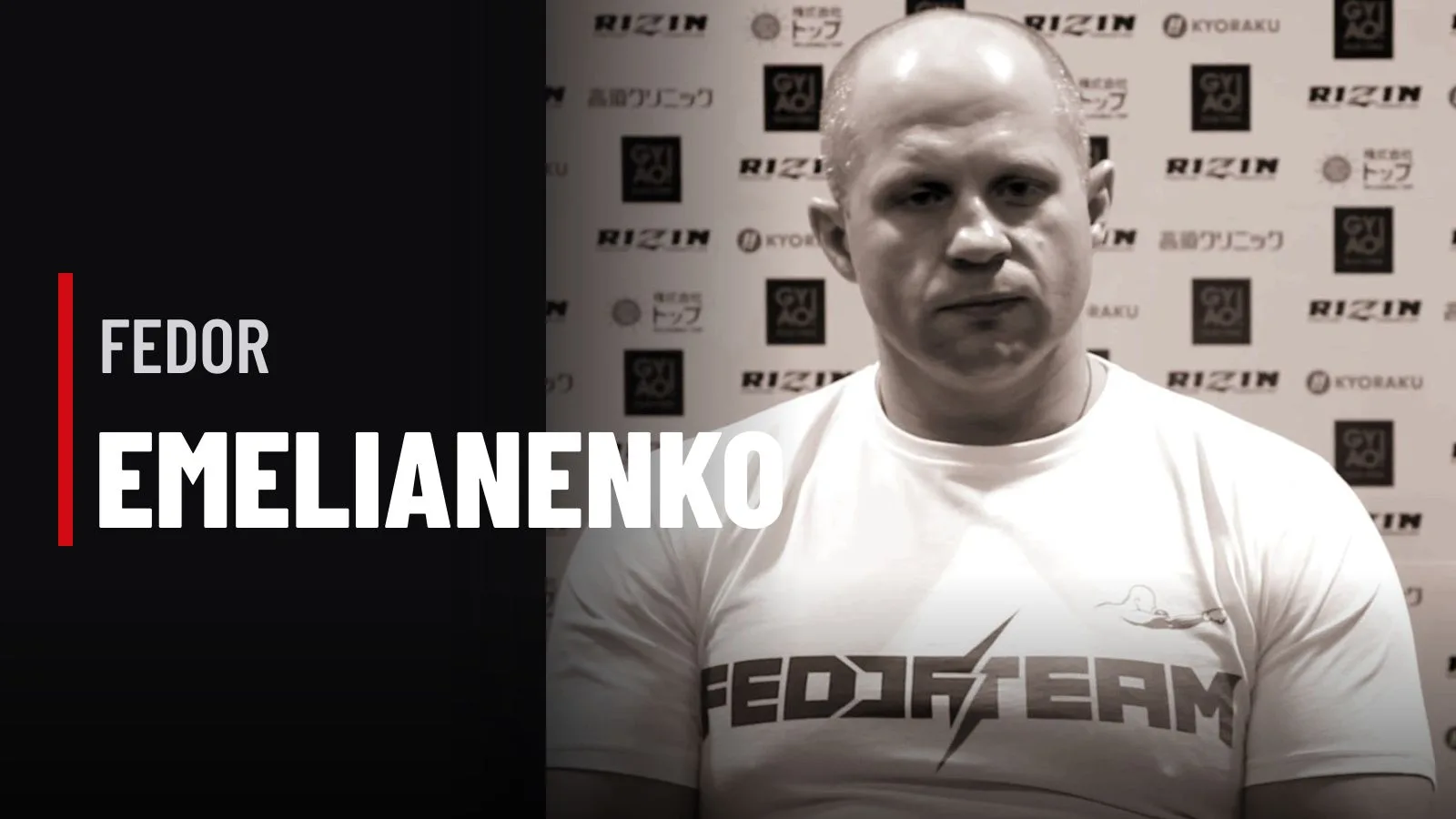
Fedor Emelianenko has been retired since February 2023, and he still can’t get through an interview without someone asking him who he’d fight. This week the question came from a room full of young people, and his answer traveled further than he meant it to.
Speaking with Ushatayka, in a Russian-to-English translation by Red Corner MMA that MMA Fighting published, the 50-year-old shut down a rumor that he was negotiating with Francis Ngannou. He explained that someone had asked about his dream fight, under any rules, and he’d answered honestly. “I couldn’t manage MMA now. I have too many injuries, but I’d have a go at him in boxing,” he said. “That’s just me thinking out loud. That’s all it is. I never said we were in negotiations.”
View post on X
That’s the most Fedor sentence imaginable. He has always been a fighter who was candid about his own body and allergic to sales talk, and to understand why the Ngannou idea grabbed people anyway, you have to go back to a steel town in western Russia.
Stary Oskol
He was born on September 28, 1976, in Rubizhne, in what was then the Ukrainian SSR. When he was two, the family moved to Stary Oskol in the Belgorod region. His mother, Olga Fedorovna, taught school. His father, Vladimir Alexandrovich, was a welder.
At 11 he started sambo and judo under Vasily Ivanovich Gavrilov, and a year later he joined sport classes run by Vladimir Voronov. Voronov’s assessment of the boy who would become the best heavyweight of a generation is my favorite detail in his whole biography: Fedor didn’t stand out from the other kids at first, and he got where he got by grinding for years. Voronov died in August 2020 from complications of the coronavirus. Coaches like him almost never make the highlight packages, but every kimura Fedor ever finished in Saitama started in that gym.
There was nothing glamorous about the years in between. He graduated with honors from a trade school as an electrician in 1994, then served in the Russian Army from 1995 to 1997, first as a military firefighter and later in a tank division near Nizhny Novgorod. His parents divorced while he was in uniform. In 1997 he earned Master of Sport in judo and sambo, made the national team and won an international judo tournament in Kursk. His partial judo record across 1999 and 2000 was 12-7, with a pair of third-place finishes in Moscow and Sofia.
Then the money ran out. In 2000 he left the national team and started fighting for pay.
Becoming the Last Emperor
His pro debut came on May 21, 2000, as part of Russian Top Team, a RINGS-affiliated stable where he trained under Volk Han and Andrei Kopylov. His first loss arrived that December, and it barely counts in any meaningful sense: 17 seconds into a bout with Tsuyoshi Kohsaka, a doctor stopped it for a cut. Footage shows Kohsaka’s elbow caught him on a missed looping punch, at an event where elbows were illegal.
He won the RINGS King of Kings tournament in 2002 and walked into PRIDE. At Pride 21 in June 2002 he outpointed the 6-foot-11 Semmy Schilt. He beat Heath Herring as an underdog. Then, on March 16, 2003, at Pride 25, he met Antônio Rodrigo Nogueira, the heavy favorite with the most feared guard in the sport, and spent 20 minutes calmly dismantling him from the top. Unanimous decision. Fedor became the second PRIDE heavyweight champion, and nobody ever took that belt from him.
The reign had moments that looked like they might end it. Kazuyuki Fujita cracked him with a right hook in his first defense and had him badly hurt, and Fedor fought his way back and choked Fujita out at 4:17 of Round 1. Years later, in February 2009, he admitted, “Fujita is the only one who ever hit me right, and he hit hard!” Gary Goodridge didn’t fare as well, and in 2011 he said, “Fedor hits so hard, I don’t remember anything (from the fight).”
The Kevin Randleman fight in the 2004 Grand Prix gave MMA one of its most replayed clips: Randleman, a two-time NCAA Division I champion, folding Fedor into a German suplex and spiking him on his head. Seconds later Fedor rolled into top position and finished a kimura at 1:33 of Round 1. He armbarred Olympic silver medalist Naoya Ogawa, fought Nogueira to a no contest after an accidental head clash, then beat him a third time at Shockwave 2004, this time on the feet, dropping him and throwing him with judo for most of the first round.
At Final Conflict 2005, Mirko Cro Cop broke his nose with jabs and turned his midsection colors with body kicks. Fedor took it to the mat, wore him down and won a decision. With a plate in his often-broken hand, he armbarred Mark Coleman at 1:15 of Round 2 in PRIDE’s American debut. His last defense came at Shockwave 2006 against Mark Hunt, on a broken toe, and he survived two americana attempts before finishing a kimura at 8:16 of the first round.
All told, he went 28 fights without a loss until June 2010, with wins over four former UFC champions in that run alone.
The UFC Fight That Never Happened
He’s widely regarded as the most prominent fighter never to step in the octagon, and the latest interview makes clear he still blames the other side. He recalled being a free agent in 2009 after beating Brett Rogers, a window in which the UFC didn’t sign him. He eventually re-signed with Strikeforce. “When I’m free, they aren’t interested. When I’m under contract, the offers start coming,” he said. He believes the goal was to bury him in litigation: “I think they just wanted to shut me down. They sign me, Strikeforce sues me, and I can’t fight for either side.”
His verdict on White, as Sherdog also reported, was blunt. “He simply doesn’t stand by his words,” Emelianenko said, adding that White has flipped between wanting him, regretting missing him and being glad he never signed him. On White’s own status in the sport, he offered one dry line: “A legend? If someone thinks he’s a legend, let them.”
Where He Is Now
The end wasn’t pretty. He first retired in June 2012 at 34-4, came back in December 2015 and fought on through Rizin and Bellator before Ryan Bader knocked him out in the first round at Bellator 290. He walked away for good at 40-7 with one no contest, with wins over seven former UFC champions (one interim). Fight Matrix ranks him the greatest heavyweight ever and fourth pound for pound. Since 2010 he has also held office, starting as a deputy in the Belgorod Regional Duma, and he led the Russian MMA Union.
His fingerprints are still on active fighters. Vadim Nemkov, the PFL heavyweight champion and a Fedor protégé, is 20-2 with one no contest and unbeaten in a decade. Ahead of his first title defense, Nemkov put it simply: “I always try to finish fights with a submission or a choke. Like Fedor says, fights should end early.”
Nemkov defends against Sergei Bilostenniy on November 14 at the Coca Cola Arena in Dubai, and if the teacher is cageside, watch his face when it ends early.