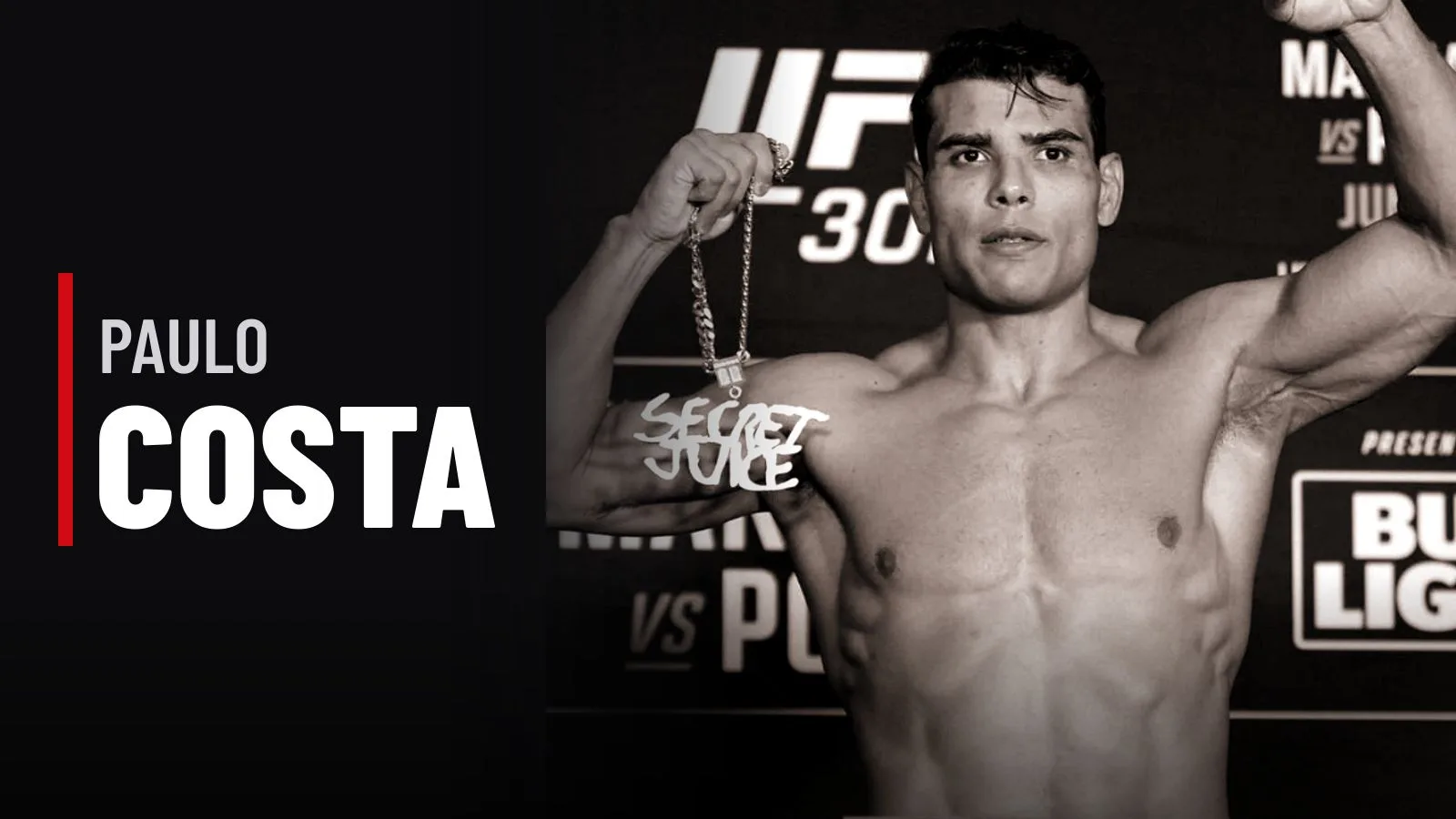
Paulo Costa has spent years saying wild things into a camera, and most of it lands as harmless theater from a middleweight who understands that attention is a kind of currency. His latest video, credited to his @BorrachinhaMMA account and pushed around X by aggregators within hours, felt different. Championship Rounds described it as Costa calling out Dagestani and Chechen fighters for “always showing up in packs, never alone.” The line Costa landed on himself was tidier and meaner: “Real fighters don’t need an entourage.” The account run by Dovy framed the video as Costa going off on Dagestani fighters for jumping people and refusing to fight fair.
It traveled fast, the way these things do. And it was wrong in a way that matters, because Costa looked at one of the most serious training cultures in combat sports and saw a guy with too many friends.
What he was actually looking at
In Dagestan, wrestling sits closer to civic life than to hobby. The local room is where boys get handed off to older boys, where a teenager spends a winter feeding single legs to someone two weight classes up, where a coach knows your father and your father knows the coach is right. You don’t come out of that place as an individual product. You come out owing people. The older partner who broke you down at 14 is part of how you fight at 30, and everybody in the room knows it.
View post on X
So when a fighter from that world walks into a fight week with a group behind him, what you’re seeing is the room traveling. Training partners. A brother or a cousin. The man who drove him to practice in the dark for years. Calling that an entourage mistakes a debt for a decoration.
The word itself gives the game away. An entourage, as fight fans use it, means hangers-on, people on the payroll, men in sunglasses whose job is to laugh at the star’s jokes. The group around a fighter who came up in a Dagestani wrestling room tends to work the other way. These are the people most likely to tell him he looked slow on the feet, the ones who will drag him back to the mat the morning after he gets home. A posse flatters. A brotherhood built on the mat corrects.
Costa also did something I can’t let slide. He threw Dagestani and Chechen fighters into one sack, as if two distinct republics with their own languages and histories collapse into a single tribe because they share a mountain range and a spot on the fight graphic. That’s the lazy nationality shorthand this sport keeps reaching for, the version where a whole region becomes one vibe, and it’s beneath a fighter who knows better than most what it feels like to be flattened into a cartoon.
The best case for Costa, and why it fails
The strongest version of his argument goes like this: a crowd changes the temperature of a confrontation, and a man facing six people in a hotel hallway has every right to feel outnumbered and to say so. That’s fair, as far as it goes.
But it only goes as far as conduct. If a specific group behaves badly on a specific night, that’s a matter for security, for promotions, for the people involved. It tells you nothing about why those six people came in the first place, and it certainly doesn’t license a sweeping claim about who is and isn’t a real fighter. The posts circulating Costa’s video point to no specific incident. They point to a people. That’s the tell.
View post on X
And the central accusation, that these fighters never confront anyone alone, collapses the moment the cage door shuts. Every fighter on every card walks the last few steps by himself. The training partners stop at the stairs. The cousin finds his seat. The coach takes the stool in the corner and can do nothing but shout. Whatever brotherhood got a fighter to that point stays outside the fence, and he takes the first shot of the night with nobody next to him. That holds for a kid out of a Makhachkala wrestling room the same way it holds for a Brazilian middleweight with a big social following.
Nobody in this sport arrives anywhere alone, either. Every fighter has a corner, a gym, coaches who never see their names on a poster. The difference with the Dagestani version is that it’s visible, loud about its loyalty, and unembarrassed about the idea that a fighter belongs to the people who built him. You can find that unfamiliar. You can find it intimidating in a hallway. Mocking it as insecurity misreads the whole thing.
Costa got his engagement. The clip did its job. But the next time a fighter from that world walks out with a dozen men behind him, watch where they stop. All of them stop at the steps, and he climbs in by himself.