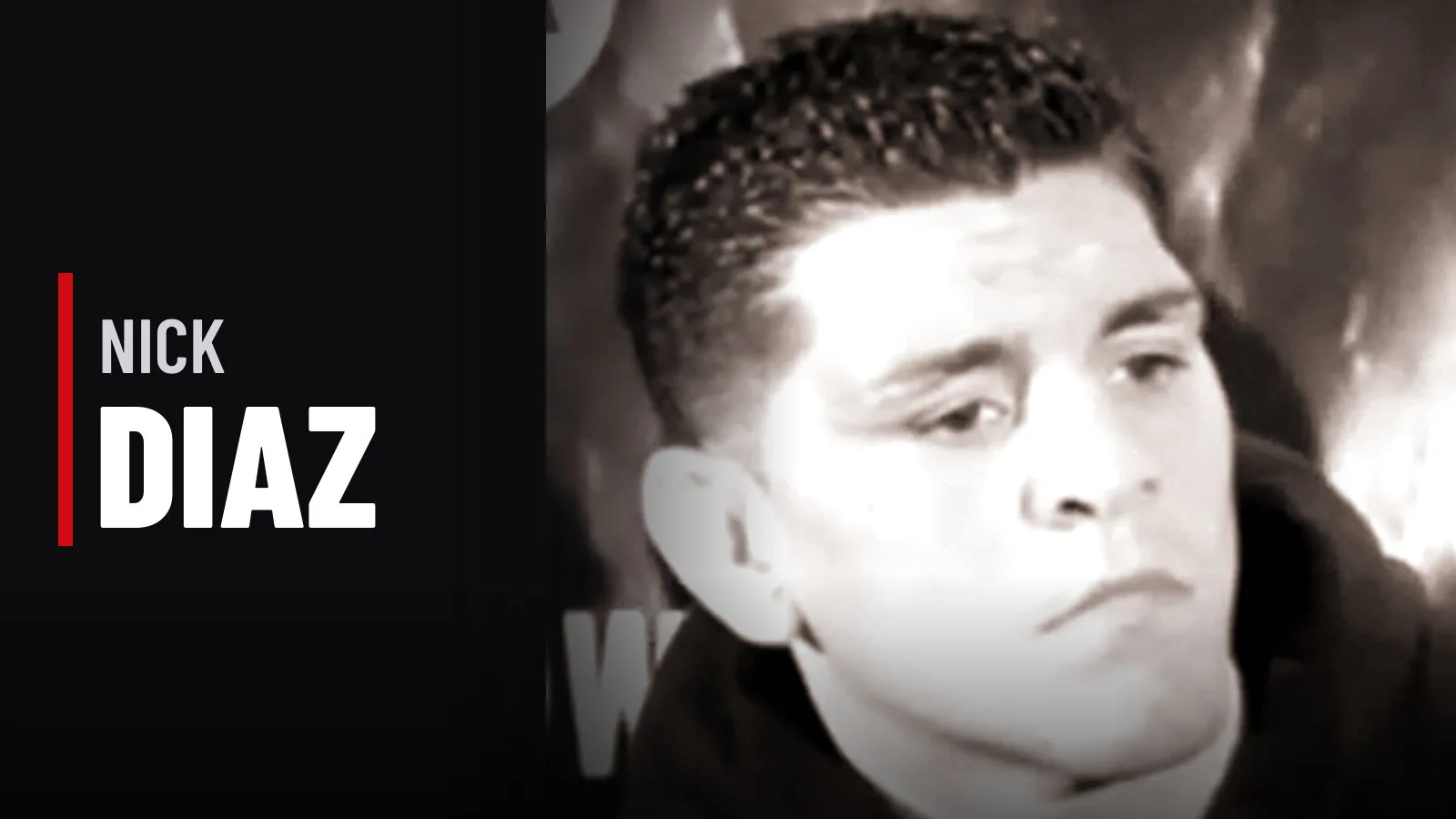
Fast facts
- Division: Welterweight and middleweight in the UFC; also fought at 160 pounds in PRIDE and EliteXC
- Record: Pro debut in 2001; full current record not covered in our source material
- Nationality: American (born and raised in Stockton, California)
- Team/gym: Cesar Gracie’s team; Brazilian jiu-jitsu black belt under Cesar Gracie (May 8, 2007)
- Notable wins: Robbie Lawler (KO, UFC 47), Frank Shamrock (TKO, Strikeforce), Chris Lytle (IFC welterweight title), Jeremy Jackson (twice), Scott Smith, Thomas Denny
Before Nick Diaz ever had a professional fight, he had a ritual. His girlfriend, Stephanie, had died by suicide, and in the aftermath he ran to her grave every day to tell her he would become the fighter she always wanted him to be. He was a teenager in Stockton, California, a high school dropout who’d lasted one year at Tokay High in Lodi, where he swam on the freshman team. Everything people would later say about Nick Diaz, the middle fingers and the press conference confrontations and the stare that seemed to look straight through a camera lens, sits on top of that daily run.
Stockton
Diaz was born on August 2, 1983, and grew up with his younger brother Nate and younger sister Nina, mostly raised by their mother, Melissa, because their father wasn’t around much. He’s of Mexican and Anglo heritage. He picked up karate and aikido as a kid and wrestled in tournaments as a teenager, and at 16 he started sambo under Valeri Ignatov, a Bulgarian national sambo champion. Around the same time he watched Renzo Gracie fight in PRIDE, which sent him to Steve Heath at the Animal House gym and eventually into Cesar Gracie’s room, where he’d spend the rest of his career.
This is the part of the Diaz story that gets lost. People remember the attitude. Fewer remember that Cesar Gracie, a coach who rarely gets a headline, built two of the most distinct fighters of a generation out of a pair of brothers from Stockton, and that the Diaz style was developed on mats in Northern California long before anybody outside the region cared.
He also fought in unsanctioned bare knuckle matches before going pro. The official debut came just after his 18th birthday in 2001, a triangle choke on Mike Wick at IFC Warriors Challenge 15. In his second pro fight, in July 2002, he beat Chris Lytle for the IFC welterweight title.
The style
Diaz fought like a man who refused to be hurried. He’d walk forward with a long, pawing jab, his hands loose, and talk to you while he did it. Against Scott Smith in Strikeforce, at a 180-pound catchweight, he used his reach and stalking jabs to set up hooks to the body, dropping Smith in the second and third rounds before taking his back and finishing a rear-naked choke at 1:41 of Round 3. That was the template: volume, body work, pressure, and a black belt waiting underneath if you panicked.
The jiu-jitsu was real. His first UFC win, at UFC 44, was an armbar on Jeremy Jackson in the last round, completing a trilogy with the man who had stopped him in the King of the Mountain tournament final and whom he’d since beaten by first-round TKO. Against Takanori Gomi he pulled off a gogoplata, a submission so rare that it was only the second ever landed in PRIDE.
The nights that defined him
At UFC 47, Robbie Lawler was a heavy favorite. Diaz chased him around the cage anyway, and in the second round he taunted Lawler, who swung wild and missed. Diaz answered with a right hook that knocked him out. If you want one image of Nick Diaz, that’s it: a skinny kid from Stockton dropping his hands to invite the punch, then making the bigger favorite pay for taking the bait.
The first UFC run also showed the other side. He lost a split decision to Karo Parisyan, then dropped three straight to Diego Sanchez, Joe Riggs and Sean Sherk. The Riggs fight was preceded by a weigh-in confrontation that Dana White and officials had to break up, and the two scuffled again at the hospital afterward. Diaz went home to Stockton, beat Ray Steinbeiss at the ICFO’s first event, then got a call the night before a hometown fight asking him to fill in at UFC 62. He submitted Josh Neer in the third round, stopped Gleison Tibau at UFC 65, and then left the UFC anyway for the Gracie Fighting Championships. That event was scrapped over poor ticket sales.
Then came Gomi at PRIDE 33 in Las Vegas. Gomi knocked him down and cut him around both eyes, but Diaz took over with his boxing, and by the end of Round 1 Gomi was fading and throwing wild. The gogoplata came at 1:46 of Round 2. Two months later the Nevada State Athletic Commission ruled it a no contest after Diaz tested positive for marijuana metabolites at a level of 175, suspending him six months and fining him $3,000. Commission chairman Dr. Tony Alamo said of the marijuana, “Did it help you win? I think it did.” Diaz rejected the idea that marijuana enhanced performance and denied smoking before the fight.
In EliteXC, K.J. Noons stopped him on cuts, and Diaz responded by having surgery to file down the bone around his eyebrows. The rematch talk curdled into a brawl in Honolulu after Diaz told Noons on the mic, “don’t be scared homie.” A planned title fight with Eddie Alvarez died when EliteXC folded.
The arrival in Strikeforce felt like a coronation. On April 11, 2009, in San Jose, Diaz beat Frank Shamrock in Shamrock’s own hometown, mounting him late in Round 1 and folding him with a body shot in Round 2 before John McCarthy stopped it. Afterward he was generous in a way people rarely expected from him. “It’s hard to hate the guy, he’s been doing what I’ve been wanting to do and saying what I’ve wanted to say for a long time,” he said. He would go on to become Strikeforce welterweight champion, adding to IFC and WEC welterweight titles, and later challenged for a UFC title.
Where he stands now
Diaz is 43. Over eight months ago, according to Bloody Elbow, he teased a return to MMA after a few difficult months in the headlines that left fans worried. This week Dillon Danis, speaking at RAF 14 media day, said a fight with Nick had been close.
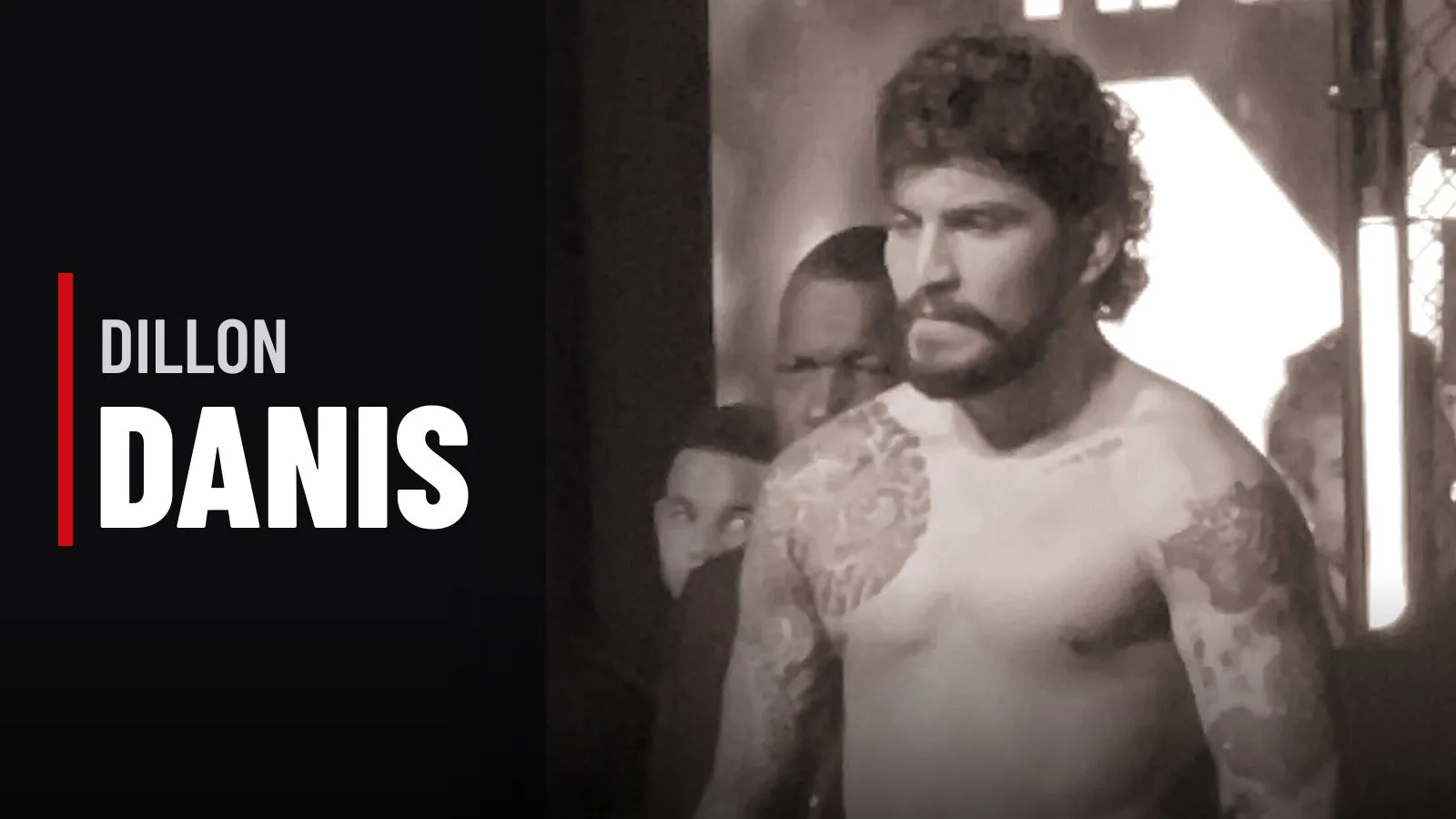
“Nick Diaz was supposed to fight, I’m not supposed to even say this, Nick was agreeing to it but he’s a little, he’s going through some stuff, but Nick was supposed to be the fight after Perry,” Danis said, per Bloody Elbow. Danis had been booked to face Mike Perry at Duel Arena 1 in August before pulling out roughly 48 hours out with an arm laceration. Bloody Elbow framed the Diaz talks as canceled because of his mental state, which rests on Danis’ account, and MMA Mania noted that a video circulating on social media had raised concerns about his well-being while declining to speculate about his health. Neither outlet reported any comment from Diaz.
Danis also said he’d toss Nick around like a ragdoll. That’s Danis being Danis, ahead of a wrestling match with Arman Tsarukyan on October 23 at the Fontainebleau in Las Vegas. Nobody needs to take the trash talk seriously. The more important part of what he said was the throwaway line in the middle, the one about Nick going through some stuff. Whatever is next for Diaz, the fight in front of him now isn’t in a cage, and there isn’t a date on it.