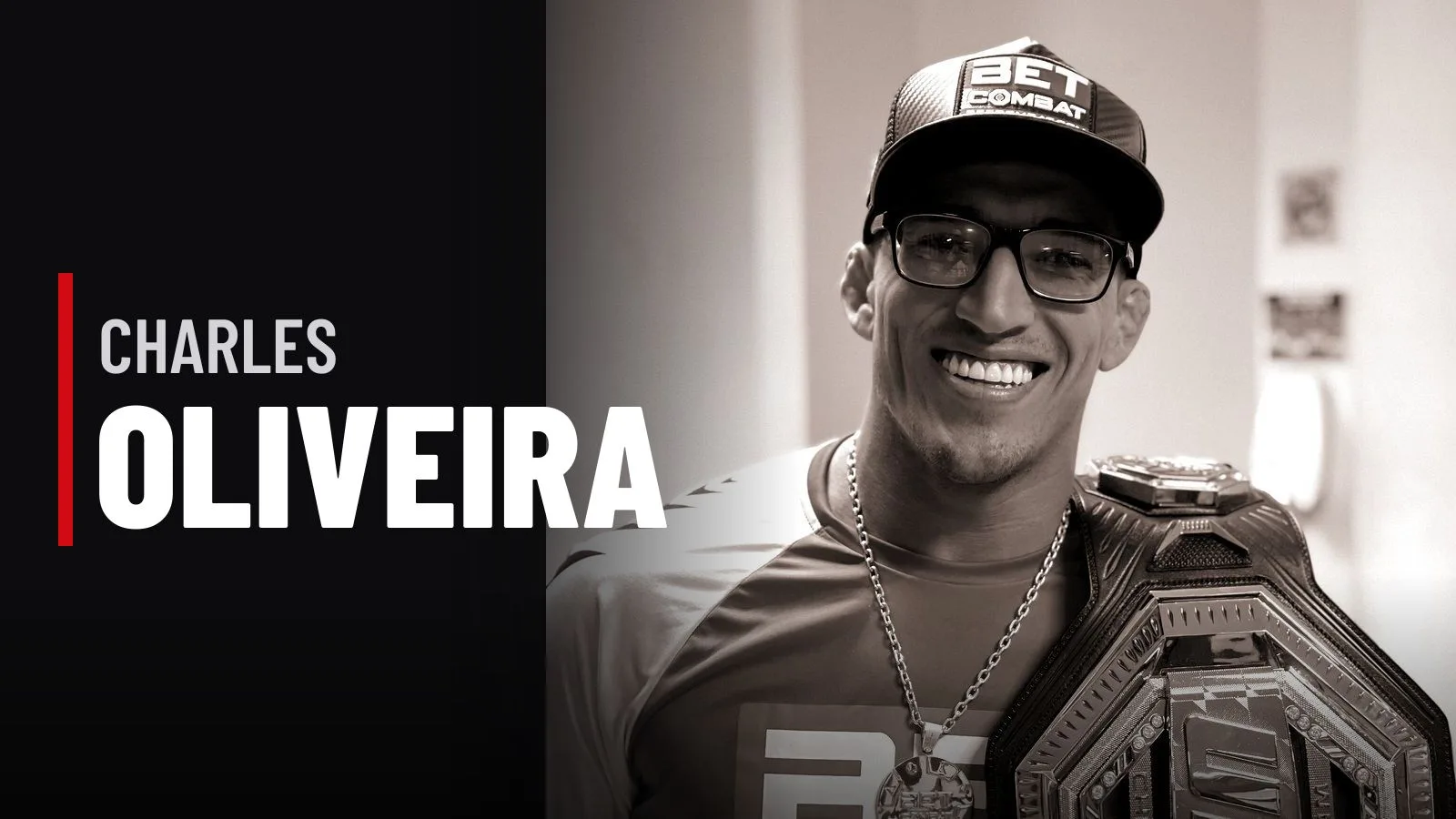
The UFC has booked Charles Oliveira against Diego Lopes to headline UFC 335, its year-ending card in Las Vegas. Bodyslam.net and Sportsnet both reported the matchup, and the prize on the table is the BMF title. Sports Illustrated ran the news under a headline about a “Bonus Machine” being booked, which tells you exactly how this fight is being sold: as a highlight reel with a novelty belt attached.
I understand why. The BMF strap moves pay-per-views, it photographs well, and it lets the promotion put a former lightweight champion in a main event without tying him to the lightweight title picture. Fine. But if you watch this fight expecting two guys to stand in the pocket and trade until somebody falls over, you’re going to miss the most interesting thing that happens all night, and it’ll probably happen on the mat in the first five minutes.
The fight underneath the belt
My read on this matchup comes down to one stylistic question. When the fight hits the floor, who decides where the legs go?
Oliveira’s grappling comes from a tradition I respect enormously. He’s comfortable on his back. He’ll accept a guard position other fighters would scramble out of in a panic, because from there he can threaten submissions off the opponent’s posture and wait for a mistake. Against most of the people he’s fought, that patience is a weapon. An opponent who drops into his guard to throw ground strikes is handing him an arm or a neck.
Lopes, as I see him, plays a different game. He doesn’t wait for the position to come to him. He attacks the legs early, uses entanglements as a way to get into scrambles, and treats the transition itself as the place where he does his best work. That’s the modern style, the one that took over submission grappling over the past decade. In that style, the closed guard is a waystation, and the real fight happens in the leg configurations: ashi garami, the saddle, 50/50.
Here’s why that matters for Oliveira specifically. A guard player who accepts bottom position is asking the man on top to engage his upper body. A leg locker on top has no interest in the upper body. Picture Round 1 going exactly like this: Oliveira opens his guard to set up something, and instead of posturing up or passing, Lopes drops back, takes a leg, and suddenly the fight is in a place where Oliveira’s favorite threats don’t exist. Every second Oliveira spends trying to retrieve that leg is a second he’s defending instead of attacking, and leg defense at this level is unforgiving. You don’t get to be late on a heel hook.
Then comes the scramble. When a leg entanglement breaks, both fighters are often half up, half down, and hunting for the back or a front headlock. That’s where I think the freshness and pace of Lopes as a featherweight on the rise plays best. He’s been surging. He’s comfortable being uncomfortable in those messy exchanges. If Oliveira’s strategy is to settle and wait, Lopes’s whole approach is built to deny him that settling.
The best case for Oliveira, and why I’m not buying it
The strongest counterargument is that Oliveira has spent his whole career turning other people’s offense into his submissions, and a leg attack is still a commitment that exposes the attacker to a counter. Fair. Leg lockers who dive recklessly get punished by experienced grapplers, and Oliveira is about as experienced as it gets.
I don’t buy it as the deciding factor because the counter only works if Oliveira is the one dictating tempo, and in a fight built around entanglements, the man initiating them sets the tempo. Countering a leg attack requires recognizing the configuration early and clearing the knee line before the hip gets turned. That’s a specialist’s skill set. A fighter whose defensive instincts were trained around guard retention and upper body submissions can be brilliant and still be a half beat behind in a leg exchange, and a half beat is all a heel hook needs. A clean counter would give Oliveira a submission, sure, but Lopes only needs one clean finish in five rounds of scrambles.
What the label costs us
My complaint about the BMF framing is practical. When a fight is sold as a slugfest, viewers grade it like one. If Lopes spends Round 2 working a leg for three minutes while the two of them fight hand fights over the heel, a chunk of the arena will boo, and somebody online will call it boring. Those are the same people who can’t see the grappling. That three minutes will be the most technical stretch on the entire card.
The gimmick also flattens what this matchup represents: an established submission artist from one generation of jiu-jitsu against a younger fighter whose ground game reflects how the sport has evolved since. That’s a story worth telling straight, and it doesn’t need a novelty strap to sell it.
My pick is Lopes by submission, and I’ll be specific about where: off a leg entanglement or the scramble that comes out of one, inside the first three rounds. Watch Oliveira’s guard the first time it opens at UFC 335. If Lopes goes to the legs instead of the chest, you’ll know which way this is headed.