Fast facts
- Division: Middleweight
- Record: 21-12 MMA (12-10 UFC), 3-2 bare knuckle boxing
- Nationality: American
- Team/gym: Team Quest under Robert Follis early on, then AMC Pankration in Seattle; later opened The Training Center in San Diego
- Notable wins: Wanderlei Silva, Yoshihiro Akiyama (twice), Mike Swick, Jorge Santiago, Aaron Simpson, Patrick Côté, Alessio Sakara
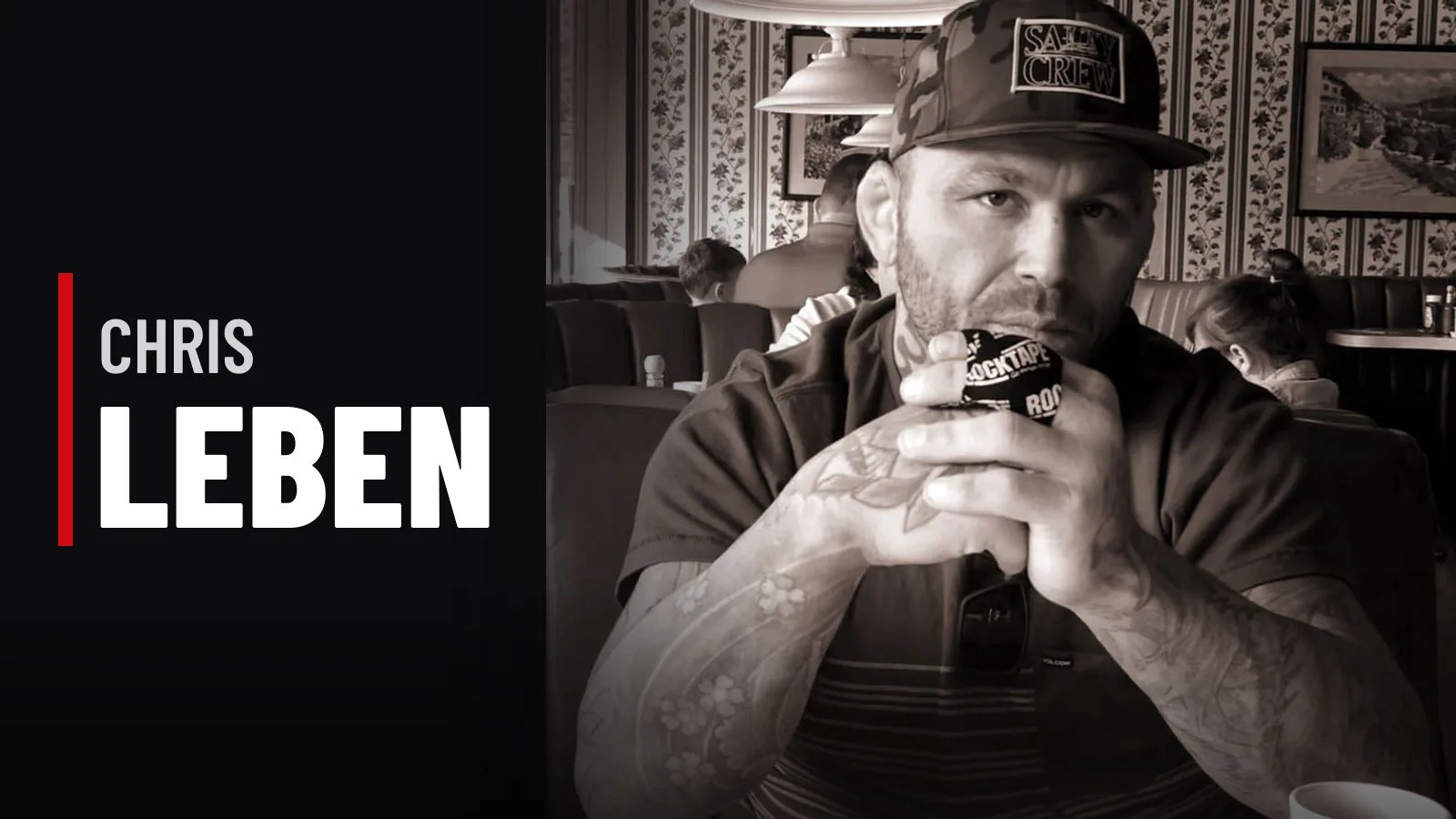
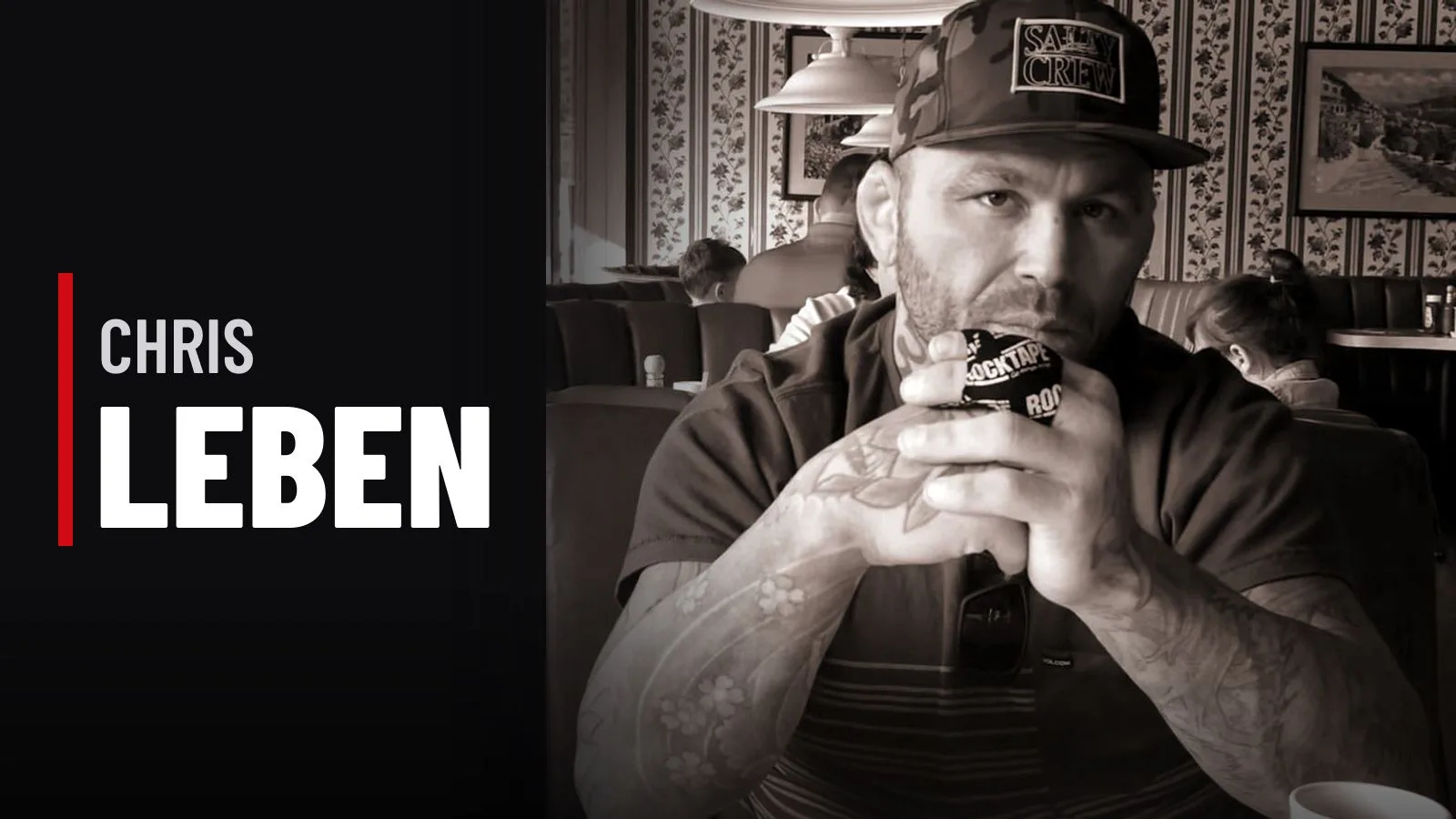
On the night of Nov. 21, a few hours after he’d beaten Yoshihiro Akiyama in Seoul, Chris Leben went on X and typed a sentence that could have come from any year of his career: “Apparently, I took a soccer kick to the face.” He didn’t remember it. The next day, after somebody showed him the clip, he posted a single word and a laughing emoji: “Oh 😂”
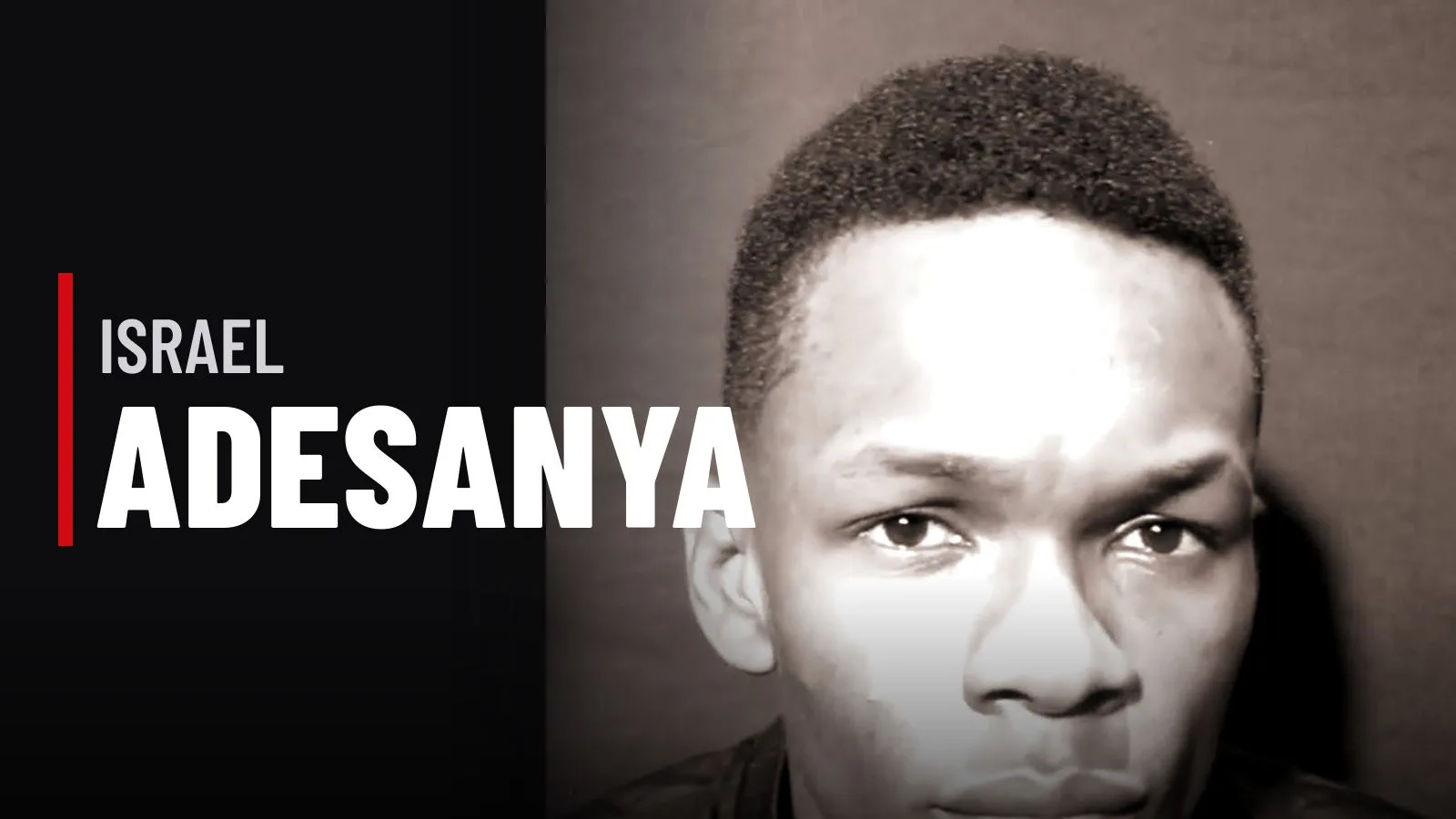
That’s Leben. He’s 46 years old, a working MMA referee and judge, 13 years removed from his last mixed martial arts fight, and he still walked forward through a flush kick to win a split decision at Black Combat 17. Akiyama is five years older, and it was the rematch of their 2010 UFC fight. According to MMA Fighting, Akiyama tripped him to the canvas in the first round, landed the kick, and then watched Leben grind out the rest of the fight on pressure alone. Akiyama retires at 16-8.
View post on X
A kid from Portland
Leben grew up in Portland, Oregon, the middle child between an older brother and a younger sister. His father wasn’t around; Leben didn’t meet him until he was 23. His mother tended bar for long hours to keep the family afloat. He skateboarded, rode dirt bikes, snowboarded, and started watching the UFC in middle school. He boxed first, then joined the wrestling team at Benson Polytechnic High School and picked it up fast.
School itself failed him. He graduated without knowing how to read or write. He joined the Army after a recruiter told him he could wrestle for the Army team, which turned out to be false, and when he learned the truth he went AWOL and was discharged.
The turn came by accident. Visiting his brother at work one day, he noticed a gym across the street. It belonged to Team Quest. Robert Follis let him in, and suddenly a kid with no plan was rolling with Randy Couture, Matt Lindland, Nate Quarry and Ed Herman. He went unbeaten as an amateur, then won his first five pro fights, three by knockout, picking up Gladiator Challenge, Sportfight and WEC middleweight belts along the way. He was the first WEC middleweight champion. Follis deserves more credit for that than he usually gets.
The Ultimate Fighter, and everything after
Most fans met Leben on Season 1 of The Ultimate Fighter, and the show did him few favors. He urinated on Jason Thacker’s bed while drunk in the first episode. During one night of drinking, Bobby Southworth called him a “fatherless bastard,” and housemates had to restrain him before he went outside to cry and sleep alone. After Josh Koscheck and Southworth hosed him down while he slept, he punched through a door. Dana White booked him against Koscheck, who controlled him on the ground for a decision. Later Quarry, injured, picked Leben as his replacement, and Kenny Florian cut him with an elbow for a doctor stoppage in the semifinal. Nevada classified both as exhibitions.
At the April 9, 2005 finale, Thacker demanded a fight with him. Leben stopped him in 95 seconds, then apologized for the bed and said he’d quit drinking because of incidents like it.
The UFC years were all left hand and chin. He won his first five in the promotion, including a split decision over Patrick Côté, and fought on each of the first six Ultimate Fight Night cards. Then Anderson Silva knocked him out in 49 seconds on June 28, 2006. Leben answered by knocking out Jorge Santiago less than two months later. Against Terry Martin, half dazed after eating several punches, he still found the knockout at 3:56 of Round 3. He flattened Alessio Sakara in the first round at UFC 82. Against Michael Bisping at UFC 89 he dropped his hands and stuck out his chin for two rounds, lost a decision, and then the two men raised each other’s arms.
The trouble outside the cage ran alongside all of it. A DUI arrest in Oregon on April 30, 2008 led to 35 days in jail and cost him the original Bisping date at UFC 85. He tested positive for stanozolol after UFC 89 and sat out nine months. Jake Rosholt choked him unconscious in front of his hometown crowd at UFC 102.
Then came the summer of 2010, the stretch I’d argue defines him. On June 19, after Aaron Simpson slammed him around in Round 1, Leben sent Simpson stumbling across the cage and face first to the mat at 4:17 of Round 2. Two weeks later he stepped in for an injured Wanderlei Silva against Akiyama at UFC 116, got outstruck and outwrestled early, kept the pace high while Akiyama faded, and locked a triangle with 20 seconds left. Afterward he yelled, “come on Wanderlei, I’ll take you out, too!” Sherdog named him Comeback Fighter of the Year.
He did eventually get Silva, at UFC 132 on July 2, 2011, with back to back uppercuts from the clinch 27 seconds in. In between, there was another DUI arrest in Honolulu and a first round loss to Brian Stann that coach Burton Richardson blamed on illness, saying Leben was vomiting before the fight. A cut against Mark Muñoz, then a positive test for oxycodone and oxymorphone, brought a one-year suspension. Losses to Derek Brunson and Andrew Craig followed. At UFC 168 on Dec. 28, 2013, Uriah Hall nearly knocked him out at the end of Round 1, and Joe Rogan caught Leben asking, “Was I knocked out?” on the way to his stool. He told his corner “I’m done” again and again.
The heart, the bare knuckles, the stripes
He retired on Jan. 20, 2014, noting he’d gone through 22 UFC fights without surgery. A Bellator deal in 2016 collapsed when doctors found an oversized, misshapen left ventricle. By late 2018 he’d been cleared, and he stopped Phil Baroni in the first round on the World Bare Knuckle Fighting Federation’s debut card, then reportedly sued that promotion for $90,000 in unpaid salary. He went 3-2 with bare knuckles and announced his retirement from combat sports after knocking out Quentin Henry at BKFC on Feb. 5, 2021.
What he built after that is quieter and, to me, more interesting. Leben became a referee and judge, and in a clip Ariel Helwani posted on Nov. 25, he talked about what that took: “It took me six years to get to this level. You better be ready to work for free for a few years... You’re not doing it for the money.” He said you officiate because you love the sport and want to give back. Then he made the case for the people doing the job well: “you should pay him what he’s worth. Otherwise, eventually he’s going to get burnt out.”