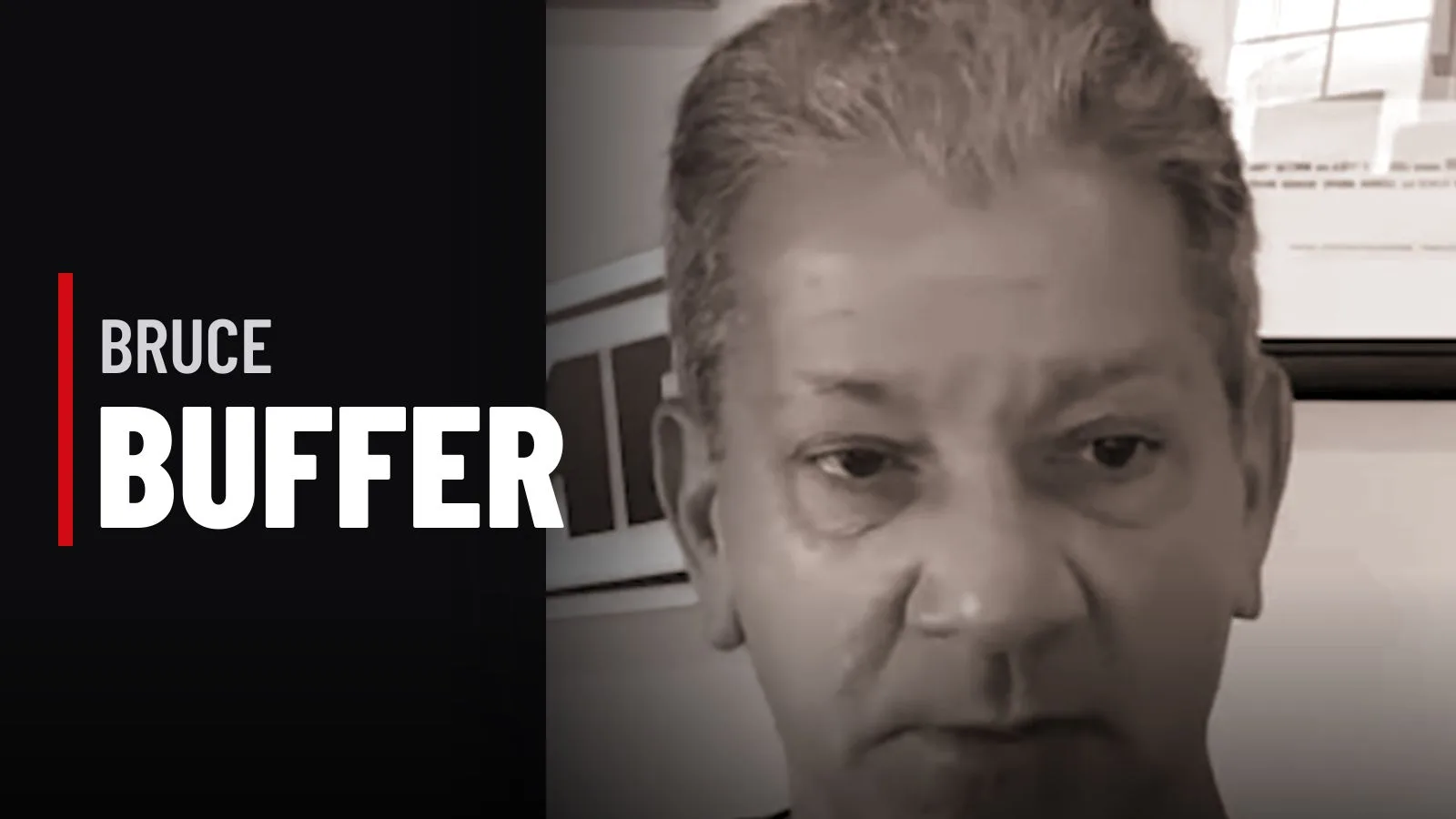
Fast facts
- Division: None. He works every weight class as the UFC’s official Octagon announcer
- Record: No fight record appears in the sources. He competed as a kickboxer until two concussions ended it at 32
- Nationality: American
- Team/gym: Second-degree black belt in Tang Soo Do, introduced to the art by two students of Chuck Norris. President and CEO of The Buffer Partnership
- Notable wins: None listed in the sources. Away from the cage, he placed 6th at the 2005 World Poker Tour Season 3 Invitational final table and finished second on Poker After Dark, outlasting Randy Couture and Dan Henderson
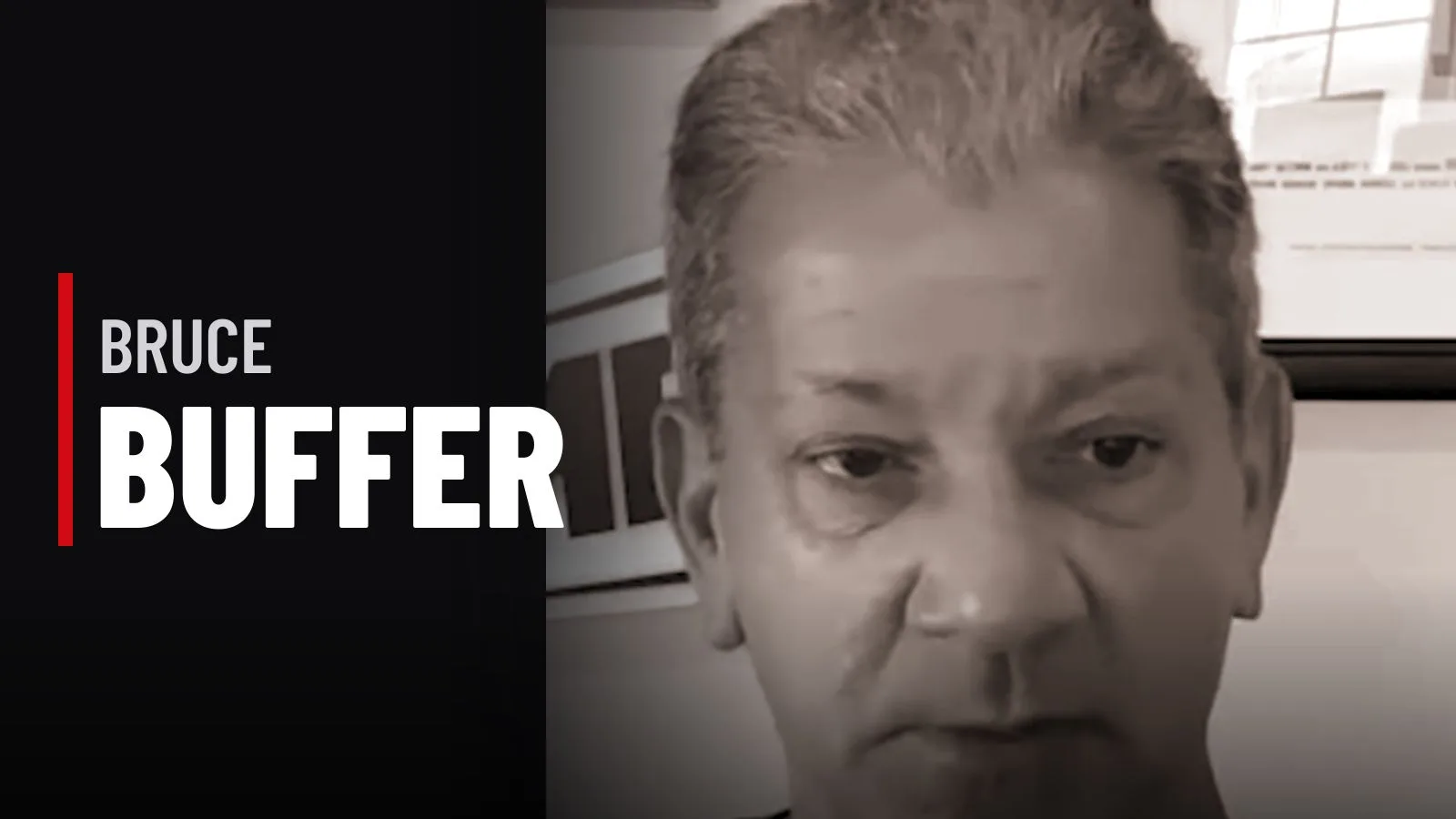
The man who has introduced more UFC fighters than anyone alive stood in the Octagon at UFC 334 last weekend, read a name, and got a middle finger pointed at his face. Josh Hokit did it during his own introduction, and Happy Punch and Championship Rounds both had the clip circulating within minutes. Buffer had criticized Hokit’s antics before the fight, so the finger was a reply, not a random act. Still, it landed strangely. Buffer is 69 years old and was inducted into the International Sports Hall of Fame in 2024. He has been doing this job since 1996.
A few days later, Alexander Volkov decided somebody should say something.
View post on X
A heavyweight speaks up for the announcer
Ariel Helwani shared Volkov’s comments, and the Russian heavyweight didn’t hedge. He warned that newer fighters might watch what Hokit did and think it was funny. “But it’s not. It’s disrespectful,” Volkov said. “He’s a legend.” He went further, arguing that the announcer’s work carries less margin for error than his own. “We can make mistakes in a fight... Bruce Buffer can’t make any mistakes when he announces fighters,” Volkov said, before closing with “It crosses the line.”
Hokit was not moved. He quoted the clip on X and mocked the idea that Buffer’s job could be harder than fighting, asking what had happened to the sport and its fighters, with a crying-laughing emoji for punctuation.
Buffer, for his part, told his side in a clip Happy Punch posted. He said Hokit had gotten worked up over a small remark, and that he had predicted out loud that Hokit would stick a finger in his face during the introduction. His plan, he said, was to swat it away. “There’s kids watching,” Buffer said. “DC said don’t do that.” So he didn’t. He finished the introduction and moved on, which is the whole job.
The kid from Philadelphia who studied judo
It helps to know that Buffer came to this as a martial artist before he was ever a voice. He started judo at 13 in Philadelphia and reached green belt. At 15 his family moved to Malibu, where he fell in with two of Chuck Norris’s students, and they brought him into Tang Soo Do. He kept at it long enough to earn a second-degree black belt. In his twenties he took up kickboxing, and he kept fighting until a second concussion at 32 made the decision for him.
View post on X
There’s a family story folded into all this, too. In 1989, Buffer met his half-brother Michael, already famous in boxing and pro wrestling rings, after their birth father saw Michael on television and reached out. By the mid-1990s Bruce was managing Michael’s career. The two built The Buffer Partnership together and grew it through licensing and appearances, with Bruce running it as president and CEO. It’s an odd and lovely thing, two half-brothers who didn’t know each other until adulthood ending up as the two most recognizable voices in combat sports.
How he got the job
Buffer’s UFC start was modest. He called the preliminary bout at UFC 8 in 1996 and then handled every fight at UFC 10. In 1997 he appeared as himself on Friends, in the Season 3 episode “The One with the Ultimate Fighting Champion,” and around that period he persuaded then-owner Bob Meyrowitz to make him the full-time announcer. He’s held the post since UFC 13.
What followed was a style built from small, repeatable gestures. His catchphrase, “It’s time!”, is reserved for the main event. Then there’s the Buffer 180, where he gestures straight across the cage, whips around, and points at the corner he’s actually introducing. Most intros get a 45 or a 90. The full 180 is for main and co-main events only. That kind of rationing matters. Fighters know what tier of turn they’re getting.
The nights people remember
At UFC 100, after months of Joe Rogan nudging him, Buffer finally did a full 360 for Frank Mir vs. Brock Lesnar. And there’s the Buffer Bow, which he has given to exactly two men, Randy Couture and Anderson Silva, dropping low the way a knight kneels before a king. Two bows in three decades. If you want to know how Buffer thinks about respect inside the cage, that number tells you most of it, and it makes the Hokit moment read a little differently.
View post on X
Outside the UFC, his résumé runs long and occasionally absurd in the best way. K-1 events. The ADCC submission wrestling championships. A 2008 HBO boxing card with Joel Casamayor and Michael Katsidis. Entourage, Here Comes the Boom, Hot Tub Time Machine 2. He’s a playable character in EA Sports UFC 3. The Luxor in Las Vegas named its poker room after him in 2010. He called Monday Night Football in 2021, produced a meme while introducing Sergio Perez at the 2023 Las Vegas Grand Prix, introduced the Athletics’ starting lineup in Las Vegas this June, and served as the official announcer for the 2026 FIFA World Cup Final on July 19.
Where he stands now
Volkov’s point about mistakes got an awkward footnote from UFC 334 itself. According to Championship Rounds, Buffer read the Kevin Holland vs. Uros Medic scorecards as 30-27, 29-28 and 28-28, which would have made it a majority decision. The broadcast later corrected the cards to 29-27, 28-28 and 28-28, a majority draw. The sources don’t say where the error came from, and anyone who has watched an announcer read a card handed to him in a loud arena knows there are a few links in that chain. But it was a reminder of the pressure Volkov was describing, on the same night.
Hokit thinks the whole thing is funny. Volkov thinks it’s a line crossed. Buffer, by his own account, wanted to slap the finger away and chose not to because children were watching. Somewhere in that choice is the man who studied judo in Philadelphia at 13 and still bows for exactly two fighters.